I the early post-liberation period of the development of Bulgarian science, the names of a number of foreign representatives of different branches of science appear - archaeologists, historians, humanitarians, physicians who were residents in Bulgaria for certain periods of time and contributed to the scientific and cultural development. Among them is the name of one of the greatest sons of the Lithuanian people - Dr. Jonas Yuro Basanavicius, who spent almost 25 years of his life in Bulgaria and actively participated in the development of the Varna Medical Society.
What characterizes Dr. Basanavicius 's scientific and professional interests was their encyclopedic nature. As a scientist, he had great contribution to the development not only of healthcare and medical science in our country but also to the development of many other fields. He also published scientific papers on the ethnography and linguistics of the Bulgarian people as well as on Bulgaria archeology. Dr. Basanavicius was also the founder of anthropological research in our country.
In 1892, he left the town of Lom and obtained a position in Varna, where he received the "Honorary Order of Civil Merit IV degree". He remained in the sea capital until the end of 1905. Here he continued his tireless activity as a physician, scientist and public figure. He was a head of the Department of Internal Medicine at the Varna Hospital from 1892 to 1905. Due to his deteriorated health, he moved to work as a physician in the quarantine supervision and then in the high school of the city. For a short time, he gained a reputation as one of the most respected physicians in Varna. He frequently travelled for consultations to the neighboring cities Dobrich, Balchik, Kavarna, Provadia, Shumen and Razgrad. His contemporaries determined his forensic expertise as "a model of skill and integrity".
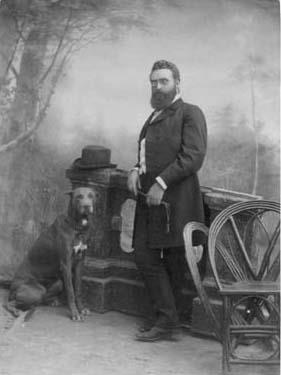
In Varna, Dr. Basanavicius continued his research activity in the field of ethnography, archeology and anthropology, which resulted in many scientific works, among which "To the epigraphy and archeology of Gorna and Dolna Mizia" (1894), which was written at the request of the Ministry of Education "Instructions for collecting anthropological materials in Bulgaria" (1896), published materials on the anthropology and health status of the population (1897), on the public pharmacy (1898) and others.
Dr. Basanavicius was elected for the municipal councilor and held this position in the period 1899-1903. In 1902, he submitted to the Municipal Council a programme for the hygienic and resort development of Varna. In the programme, he recommended Varna's landscape greening and the swamping of the marshes around the city that were a source of malaria. By indicating that tuberculosis takes a large number of victims from the population living in miserable homes, the programme suggested that the city's architect developed a model for cheap and healthy housing. Appreciating the great opportunities for the development of Varna, Dr. Basanavicius also offered the first programme for the complex development of the city as a resort by combining the possibilities for climatic treatment, sea treatment, lake mud and grape treatment. The project also provided a number of details such as the organization of the housing, the development of the Sea Garden with construction of a casino, a pavilion for music, benches and others. In addition, due to his proposal, the Council decided to establish a museum in Varna to collect "archaeological objects and materials for the anthropology and ethnography of the present population".
In 1899, Dr. Basanavicius participated in renewing the activity of the Varna medical society, co-established the Varna archaeological society and took part in the work of the Bulgarian Medical Association.
For the valuable contributions he made for the Bulgarian science he was elected corresponding member in 1898 and in 1902 for a regular member of the Bulgarian Literary Society, the predecessor of today's Bulgarian Academy of Science. Dr. Basanavicius is also a man of impeccable morality. He was offered to take the senior positions of Chief Health Officer in Sofia and a Director of the Great Bulgarian Hospital in Constantinople but he refused those proposals.
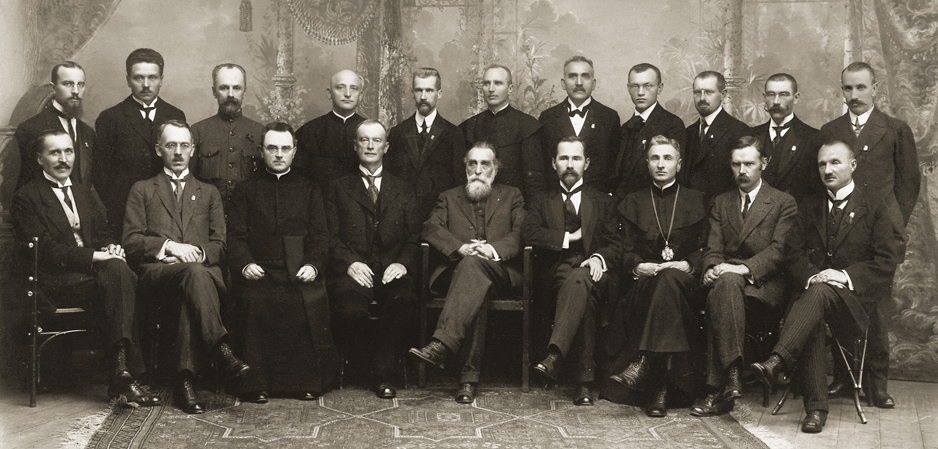
On May 31, 1905, Dr. Basanacicius left Bulgaria and travelled to Lithuania where he worked for the rest of his life. There he continued the work started in Bulgaria, writing major works on the history, culture, ethnography and struggle for liberation of the Lithuanian people. He was a founder and a chair of the Lithuanian Scientific Association that was the beginning of the Lithuanian Academy of Sciences. During this period, Dr. Basanavicius did not interrupt his connections with Bulgaria. In 1921, he wrote an extensive autobiography describing his life in Bulgaria. In his biography, 70-year old Dr. Basanavicius wrote: "For the development of Lom and other areas I have also made some efforts. I am delighted that I was not a parasite in Bulgaria". In 1925, he published his study "Language links between the ancient Thracians and modern Lithuanians". He died on 16 February 1927 in the city of Vilnius.
Today we are grateful for the study and dissemination of the enormous cultural and scientific heritage that Dr. Basanavicius left to the Bulgarian and Lithuanian people. His works deserve to be thoroughly explored and valued in order to serve future generations as well.
135 years Varna Medical Society
