More than 90 representatives from Bulgaria's 12 research universities, scientific organisations, government institutions, the business sector, and the innovation ecosystem participated in the workshop seminar “Roadmap for Research Universities in Bulgaria (2026–2036): A Vision for Sustainability and Global Competitiveness". The event took place on 17 June in Sofia and was organised by the Network of Research Universities in Bulgaria, hosted by Medical University “Prof. Dr. Paraskev Stoyanov"–Varna. The forum was opened by Mr. Atanas Pekanov, Deputy Prime Minister in charge of European Funds Management, who congratulated the participants and emphasised that scientific research is one of the key drivers propelling Bulgaria into the future. He added that he had decided to attend the meeting because he was impressed by the initiative to prepare a Roadmap for the Development of Research Universities for the period 2026–2036, which demonstrates the willingness of the sector to set its own specific goals and implement them. In conclusion, the Deputy Prime Minister Pekanov encouraged the research universities to remain ambitious so that Bulgaria can enter the global top 500 university rankings over the coming years.
At the outset, a vision was presented for sustaining the momentum in science achieved over the past several years. Building on the strong results of the project “Establishment of a Network of Research Higher Education Institutions in Bulgaria" under the National Recovery and Resilience Plan, the ten research universities within the Network presented their achievements from completed projects and reported accelerated progress in research activities made possible through targeted financial and administrative support. In his address, Acad. Toni Spasov, Coordinator of the Network of Research Universities, highlighted the goals ahead – achieving average European growth levels over the ten-year period (2026–2036), maintaining and further developing the established research infrastructure, and institutionalising the Network of Research Universities. Prof. Violeta Yotova, Vice-Rector of Medical University–Varna, underscored the need for Bulgaria to establish its own scientific “Ivy League" of universities to further advance research, enhance the prestige of scientific activities, and thereby foster closer relations between academia and industry, between the Network and other research institutions in the country, and in general to maximise the societal impact of research-support policies implemented in recent years.
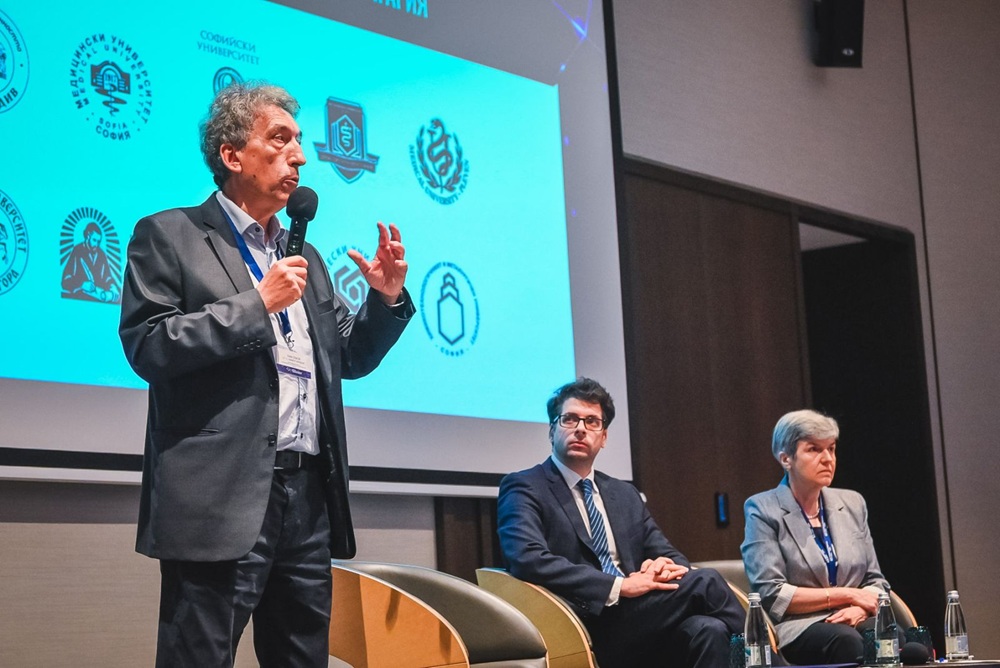
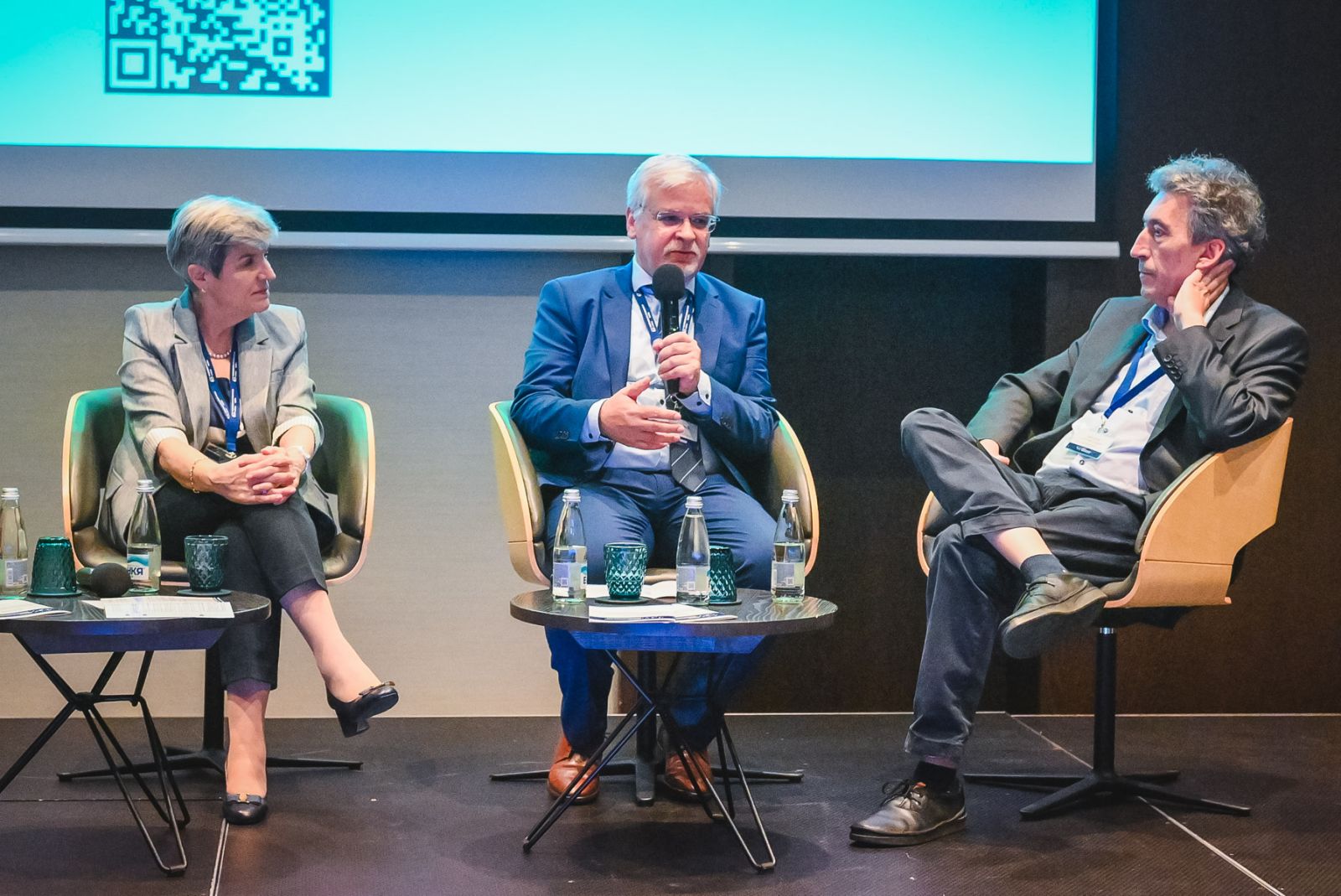
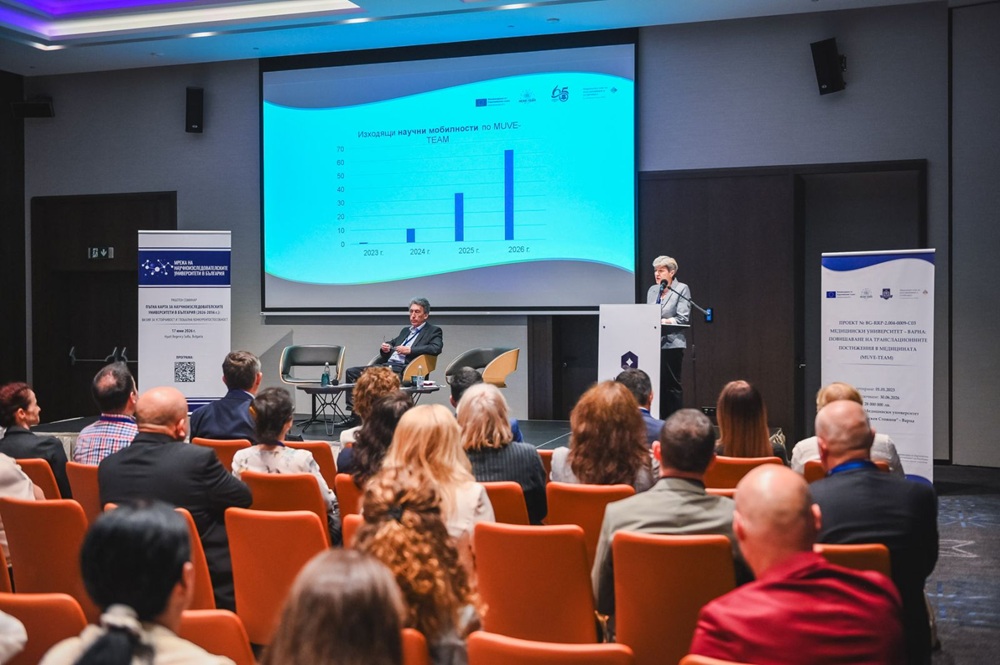
The session began with a discussion of the role of research groups as a driving force for institutional change and a key factor in attracting and retaining talented scientists. Successful models for building elite research teams, sustainable international partnerships, and supporting the career development of young researchers were presented. Particular emphasis was placed on the measures aimed at counteracting the “brain drain", attracting Bulgarian scientists from abroad, establishing new scientific schools, and promoting the shared use of state-of-the-art research infrastructure by scientific organisations, external researchers, and the business sector.
During the second session, participants discussed opportunities for more active involvement of Bulgarian research organisations in the European Research Area and the Horizon Europe programme. Key priorities included increasing participation in international research projects, securing funding under the “Seal of Excellence" scheme, and developing joint initiatives between the scientific community and the business sector. Participants also explored opportunities for more effective use of European funding instruments and for strengthening the presence of Bulgarian research organisations in the international research community. A separate discussion focused on the challenges facing technology transfer within academic institutions.

The final session addressed the future development of the Network of Research Universities in Bulgaria. Participants outlined the major challenges facing the sector, including the need for legislative changes in the area of technology transfer, the development of university spin-out companies, and intellectual property protection mechanisms.
The meeting was attended by the Deputy Ministers of Education and Science, Acad. Nikolay Vitanov and Prof. Senya Terzieva. A major outcome of the forum is the elaboration of a Roadmap for Research Universities in Bulgaria for the period 2026-2036, along with preparations for a memorandum that will define the key priorities for the advancement of research, innovation and technology transfer over the next decade. Government institutions involved in supporting research and innovation were represented by heads of directorates, departments, funds, and international financial institutions.
At the conclusion of the forum, the participants and representatives of the Ministry of Education and Science agreed to pursue all available mechanisms for institutionalising the Network of Research Universities. These options may include, but are not limited to: transforming financial incentives for research and development activities; mechanisms to provide additional incentives to retain promising early-career researchers; additional mechanisms to develop existing research groups with internationally recognised scientific results, etc.
About the Network of Research Universities
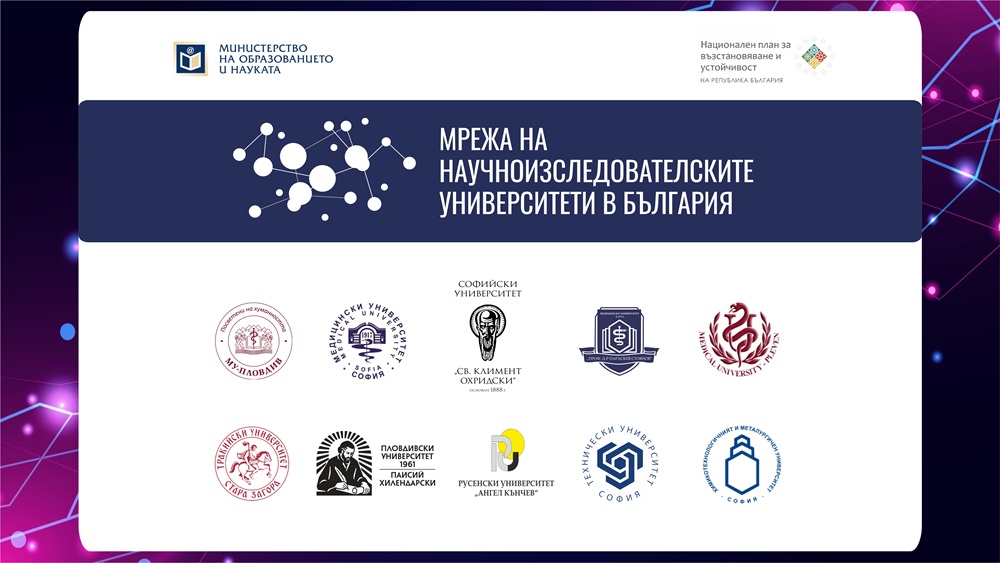
Established in 2024 under the National Recovery and Resilience Plan, the Network of Research Universities brings together ten prominent Bulgarian higher education institutions with the goal to develop research, innovation and technology transfer. Its members are Sofia University “St. Kliment Ohridski", Medical University–Sofia, Medical University–Plovdiv, Medical University–Varna, Technical University–Sofia, University of Chemical Technology and Metallurgy–Sofia, Paisii Hilendarski University of Plovdiv, Trakia University–Stara Zagora, Medical University–Pleven, and Angel Kanchev University of Ruse.
Thanks to targeted funding over the past 42 months, modern research centres have been established, research teams with international potential have been strengthened, and favourable conditions have been created for attracting highly qualified scientists. Not only the number, but also the quality of publications with international visibility has been increased. The outcomes achieved showcase the Network's significant contribution to the development of a competitive, knowledge-based economy.